
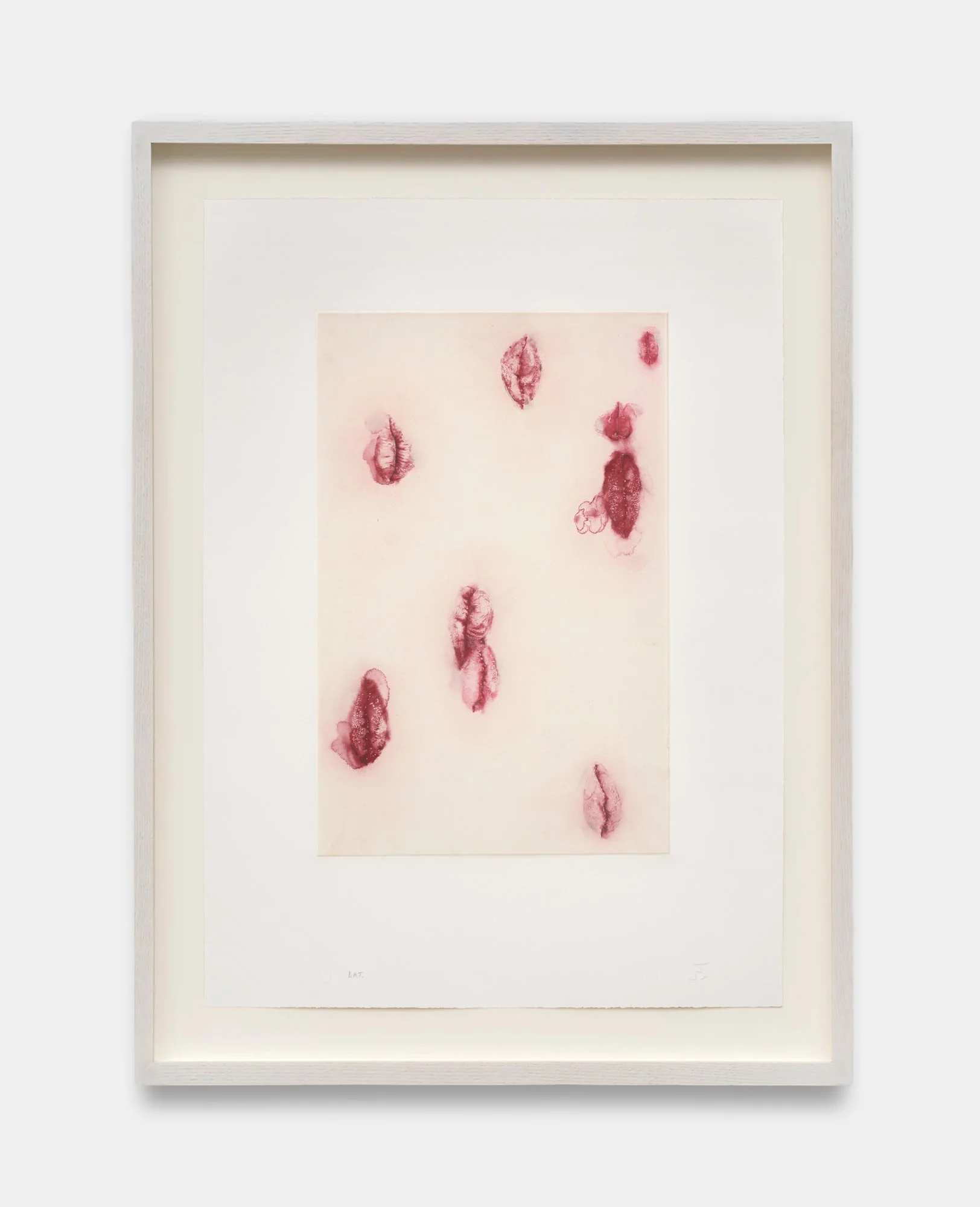
Kaari Upson Estate
Fooling Oneself, 2026
Dimensions
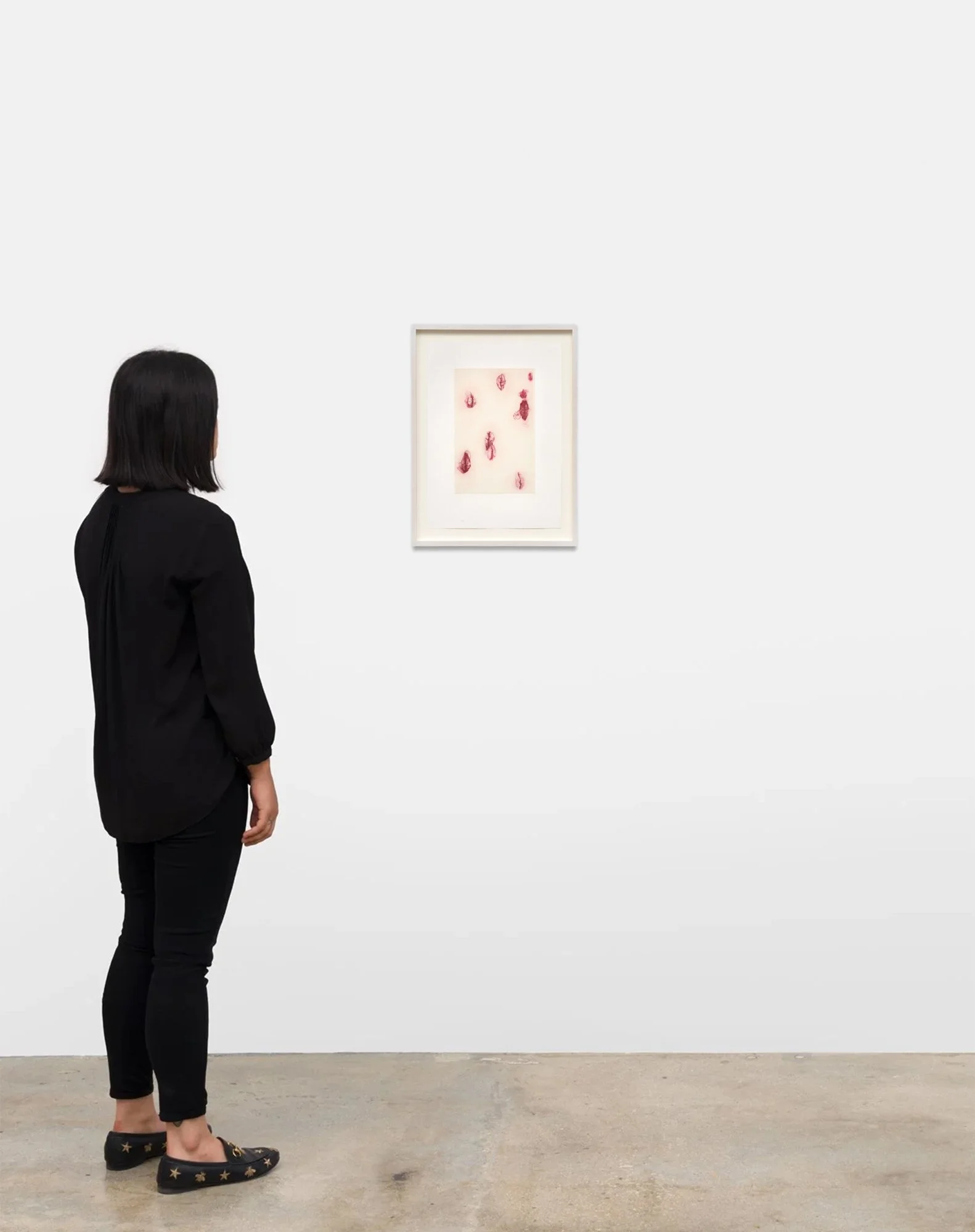
Image Size: 14.5 x 9.5 in (36.83 × 24.13 cm)
Sheet Size: 21.5 x 15.5 in (54.61 × 39.37 cm)
Medium
2-colour photogravure with gampi chine collé and hand applied graphite on Somerset Velvet 250gsm with light gampi
Edition of 25 + 4 AP
$3,200
Sold unframed
Authentication
Each print comes with a Certificate of Authenticity from the Esmé Trust/Kaari Upson Trust
Publisher’s, Artist’s, Printmaker’s blindstamp on verso and inventory number and copyright stamp on recto
Release Date
September 5, 2026
Shipping
Print will ship 4 weeks after purchase
Los Angeles residents have the option for local pickup from Ollin Editions
International Sales or more Payment Options
Please contact us at patricia@ollineditions.com or +1 (323) 821-0595
About the artwork
The print Fooling Oneself - a photogravure with Japanese gampi chine collé and hand-applied graphite, in an edition of 25 - takes its title from a work on paper dating from 2014. Developed in collaboration with Michael Benevento - a close friend and early champion of Upson’s work - the edition was expertly proofed and printed by master printer Erika Schneider at Bleu Acier, Tampa, Florida. Fooling Oneself, repeats the image of Angelina Jolie's iconic lips, transforming one of contemporary culture's most recognizable symbols of beauty and desire into a psychological pattern of projection. For Upson, Jolie became a symbolic and therapeutic object, a cultural figure through whom she explored conflicting ideas of sexuality, motherhood, glamour, vulnerability, and transformation. By isolating Jolie's lips and repeating them as a continuous motif, Upson reveals how celebrity becomes a surface onto which personal and collective fantasies are projected. In doing so, Fooling Oneself reflects Upson's enduring fascination with the unstable boundaries between identity and projection, reality and fiction, and the stories we tell ourselves in order to endure them.
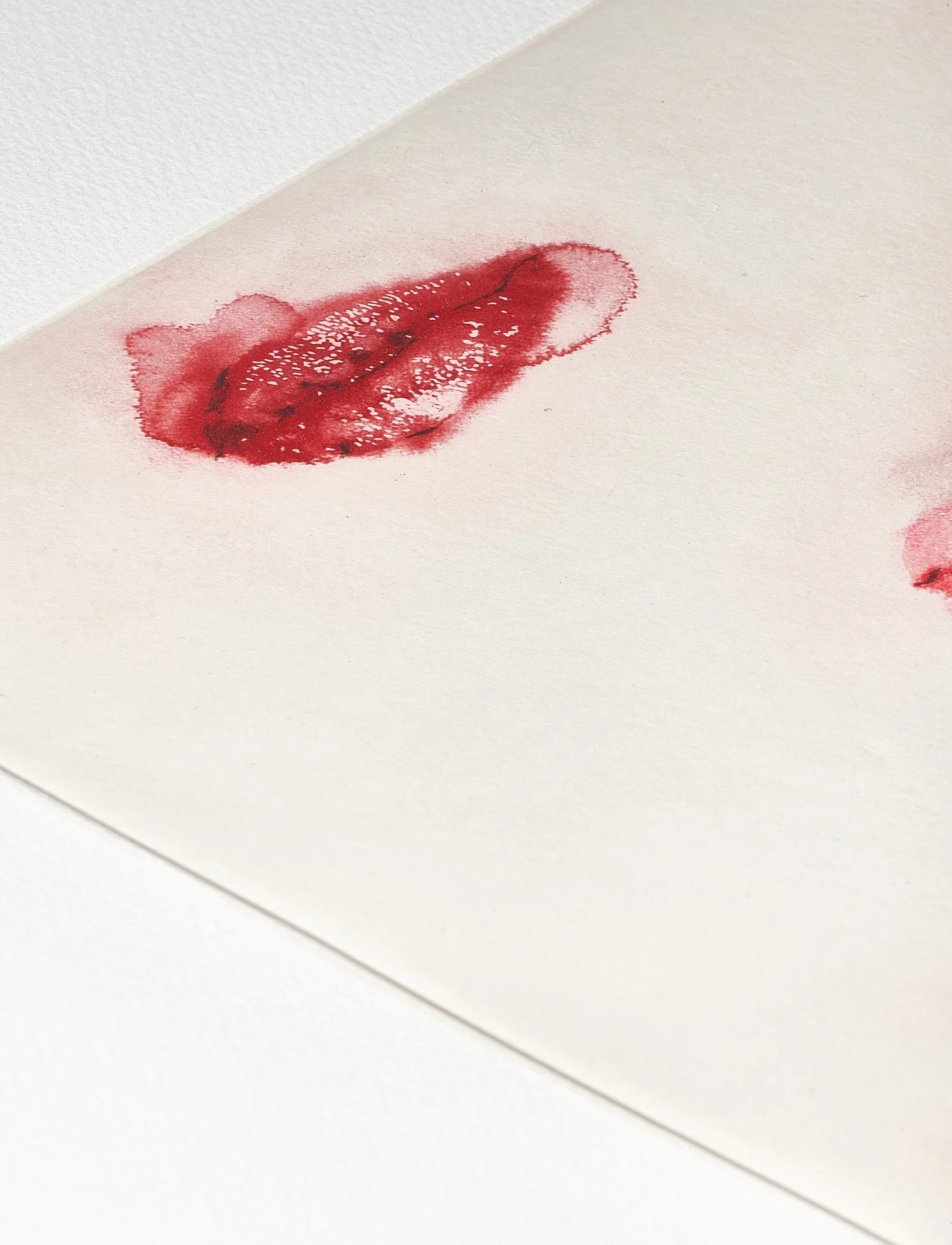
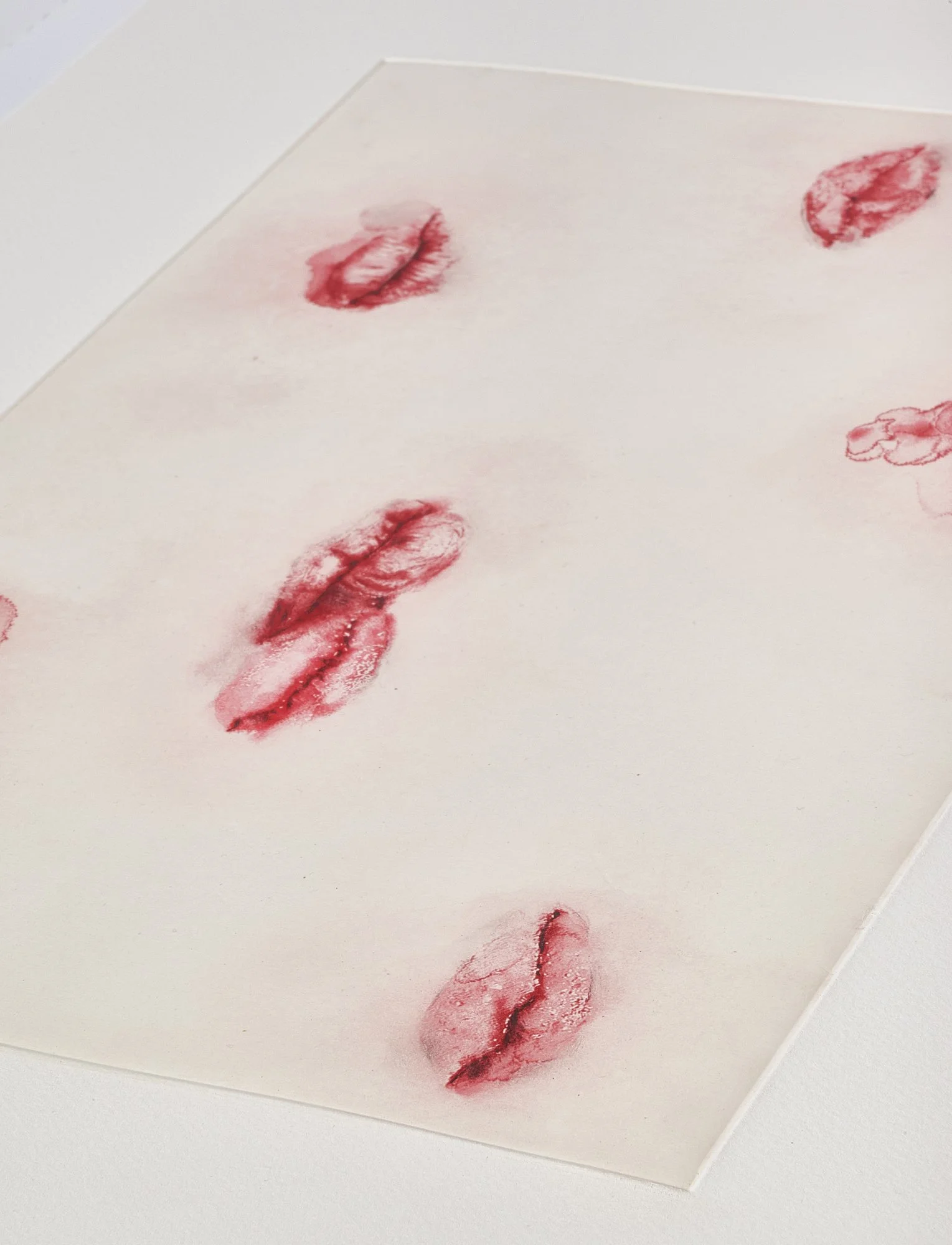
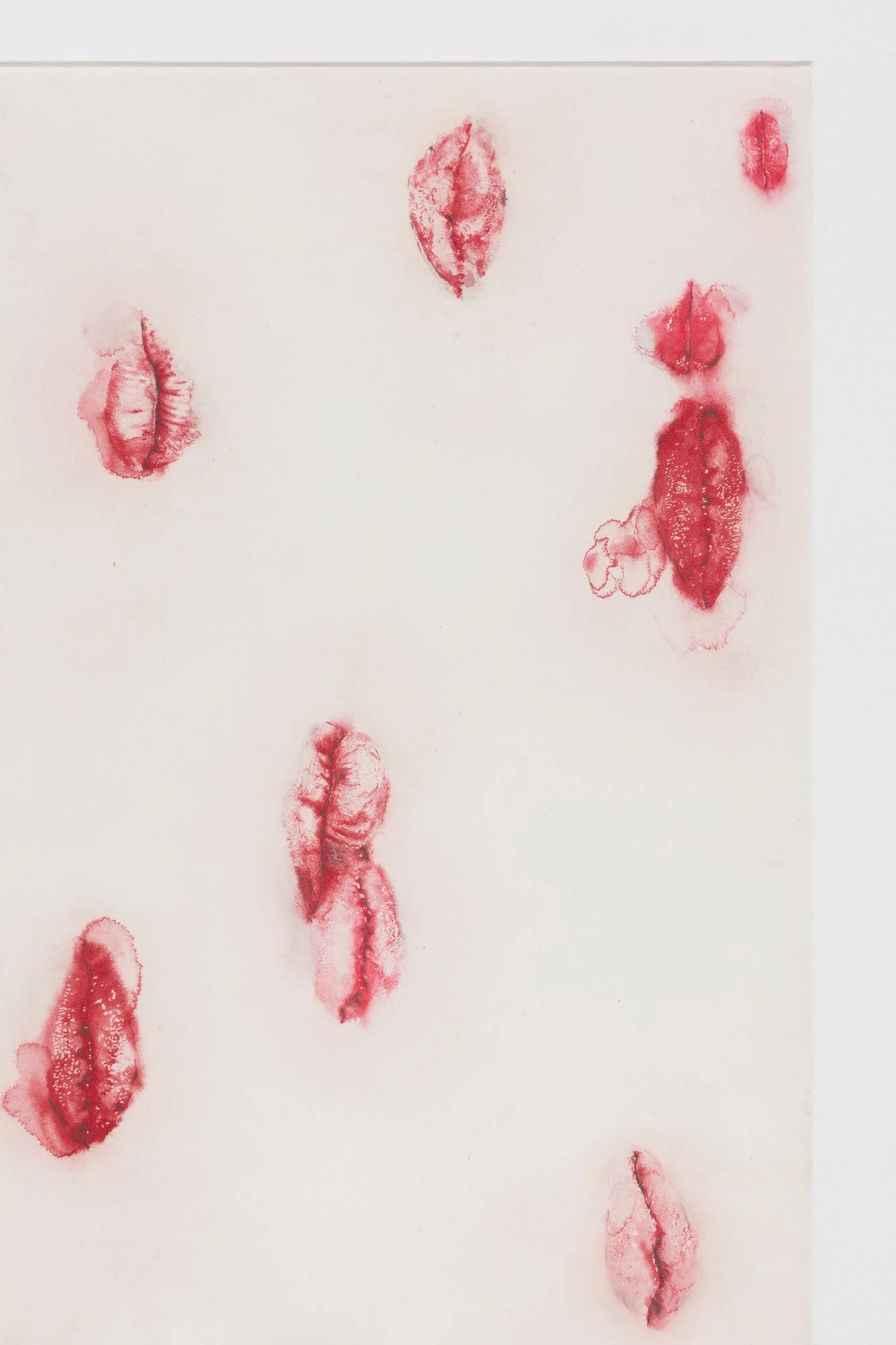
Photogravure is a technique that involves the flipping, or mirroring of an image, which is in turn corrected once the paper is physically pressed onto the copper etching plate. A contact is made, under immense pressure from the printing press, resulting with the paper gaining a physical impression of an image - the process sits somewhere between drawing and sculpture. With chine collé, a wet, glued sheet of fine gampi is laid on top of the inked copper plate. During the proofing process the translucent Japanese paper resembled the application of a glistening facial mask, or a peeled bodily skin, and brought to mind Upson’s sculptural, embodied process of casting, “skinning”, and inverting objects. The scale of the print was determined in relation to tech devices - specifically the screen sizes of an Apple laptop and iPhone. The ratio of the copper printing plate was nearly identical to a laptop screen and the resulting print is surrounded by a 3 inch border of white paper - the width of both an iPhone and an adult hand.
Repetition and prolonged periods of focus were fundamental aspects of Upson’s drawing practice, and the print edition Fooling Oneself extends, rather than departs from the work's original conception. The highly focused and particular attention to detail and perfection inherent in much of printmaking, is both in step with Upson’s obsessive approach to her drawing practice, and opposite to her scruffy and irreverent handling of the material. Drawings were often crumpled and creased on purpose, and dirtied on the studio floor. The printing process demands a compulsive level of care, touch and observation; each pair of lips on the copper plate is carefully inked and the excess is wiped and buffed away, with the final clean done by the printmaker’s bare palm. These precise caresses are repeated over many hours, days, and often weeks, depending on the number of prints desired. This deliberate and focused tactility is at odds with the mechanized, industrial pressure of the printing press, and highlights one of the key dualities of printmaking. As Jennifer L. Roberts suggests in her book Contact: Art and the Pull of Print, ‘Every print is the result of a process of contact and release, which links it immediately to themes of touch, presence, and intimacy – but also to themes of loss, separation, and memory.’
The laptop and phone are devices which are constantly vying for our attention, reflecting desires back at us. They bear a resemblance to obsidian - a volcanic, black glass that became humanity’s first manufactured mirrors 8,500 years ago - and through a multitude of them we scroll content of desire, lust, disgust, consumption. We hold our tactile, intelligent black mirrors up to absorb images, words, and sounds, and we seem increasingly merged with them. By zooming in on, and isolating the lips, they become abstracted from their basic functions of consuming, enclosing around, pressing against, moving to convey meaning. They are one of our primary means of communication, and project outwards a lifetime of contradictions; capable of casting both affirmations and denunciations - soft and loud, delicate and vicious, loving and spiteful. Rendered and imprinted, these uncanny lips now float; they are disembodied and mute. They present an ideal of youthful attraction and fullness, paused on the way towards decline. Turned on their sides however, now vertical rather than horizontal, Upson thought these orifices looked like buttholes. With their watery, bleeding edges they carry the duality of beauty and ugliness present in much of her work.
The title, Fooling Oneself, addresses one of the central psychological themes in Kaari Upson's work. It speaks to our tendency to construct narratives that help us survive trauma, longing, and uncertainty. Rather than referring simply to deception, the phrase describes the process of believing in our own projections through stories, fantasies, and identities that gradually become inseparable from reality. Throughout her practice, Upson repeatedly blurred the boundaries between memory and invention, suggesting that what we choose to believe often shapes our reality as profoundly as objective truth. For Upson, Fooling Oneself was not simply an act of denial, but often a means of psychological survival.
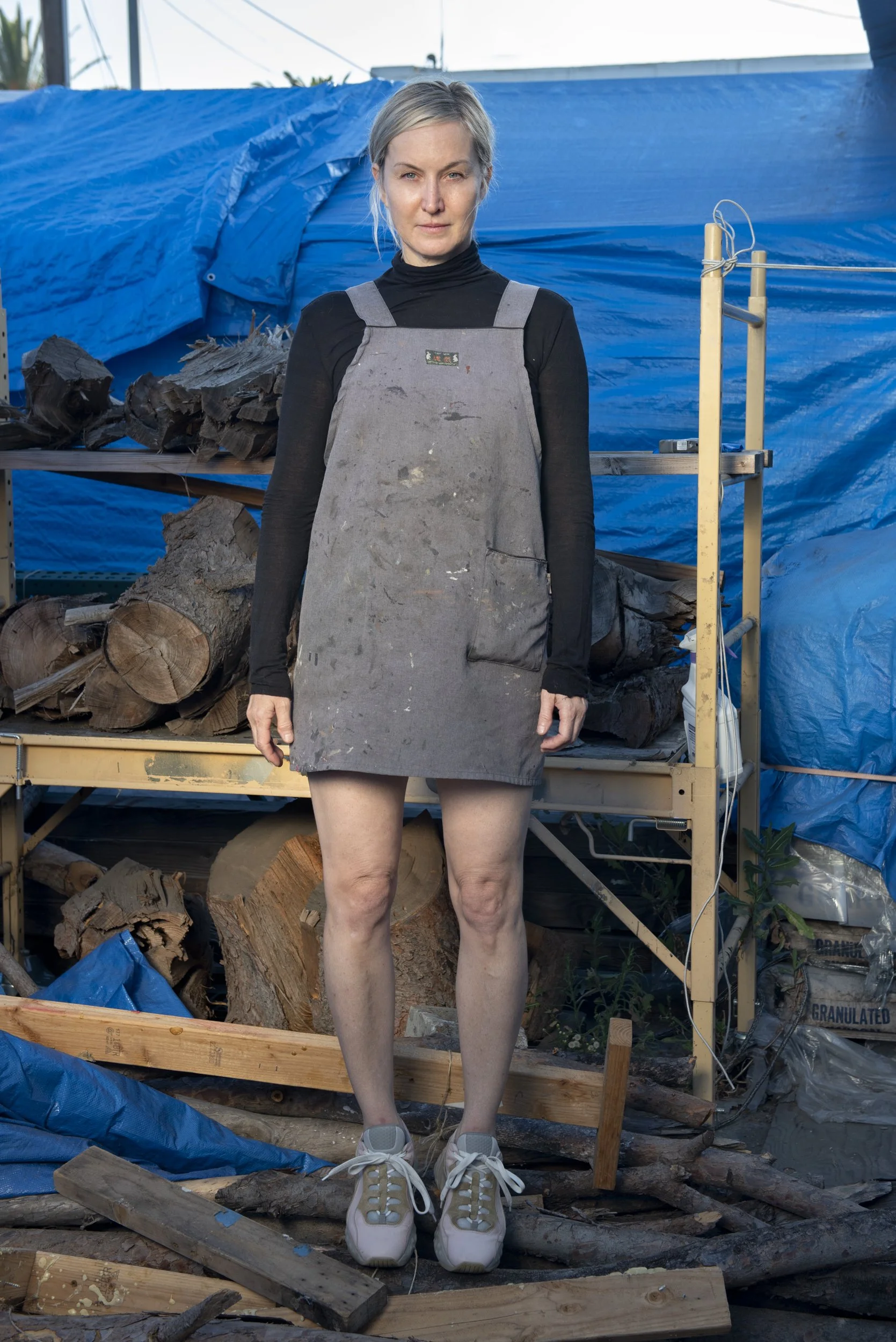
About the artist
Kaari Upson (1970–2021) lived and worked in Los Angeles and New York. Her work has been the subject of numerous solo exhibitions, including the Hammer Museum, Los Angeles (2023, 2007); Deste Foundation, Athens (2022); Kunsthalle Basel and Kunstverein Hannover (2019); and the New Museum, New York (2017). She participated in numerous group exhibitions and international biennials, including the 58th and 59th Venice Biennale (2019, 2022), the Whitney Biennial (2017), and the 15th Istanbul Biennial (2017), as well as exhibitions at institutions such as Kunstmuseum Basel, Centre d’Art Contemporain Genève, SFMOMA, Cleveland Museum of Art, Walker Art Center, Minneapolis, CAPC Bordeaux, Belvedere 21, Vienna, and the Museum of Contemporary Art, Los Angeles.
The Kaari Upson Trust is globally represented by Sprüth Magers.
Photography credits:
Portrait of Kaari Upson, Amelia Burns
Artwork photography: Eli Jensen, Josh Schaedel, Zac Yonekawa